# AgainstAllOdds
Marcus makes it plain: the Reality Check Movement isn’t about profit—it’s about purpose.
Leading youth entrepreneurial workshops. Launching inspirational merchandise and clothing lines. It isn’t just to show them how to make money. Marcus is teaching the process of what it actually takes to create purpose. “If you have purpose… You fall in love with trying to devote the change you say you want,” he explains.
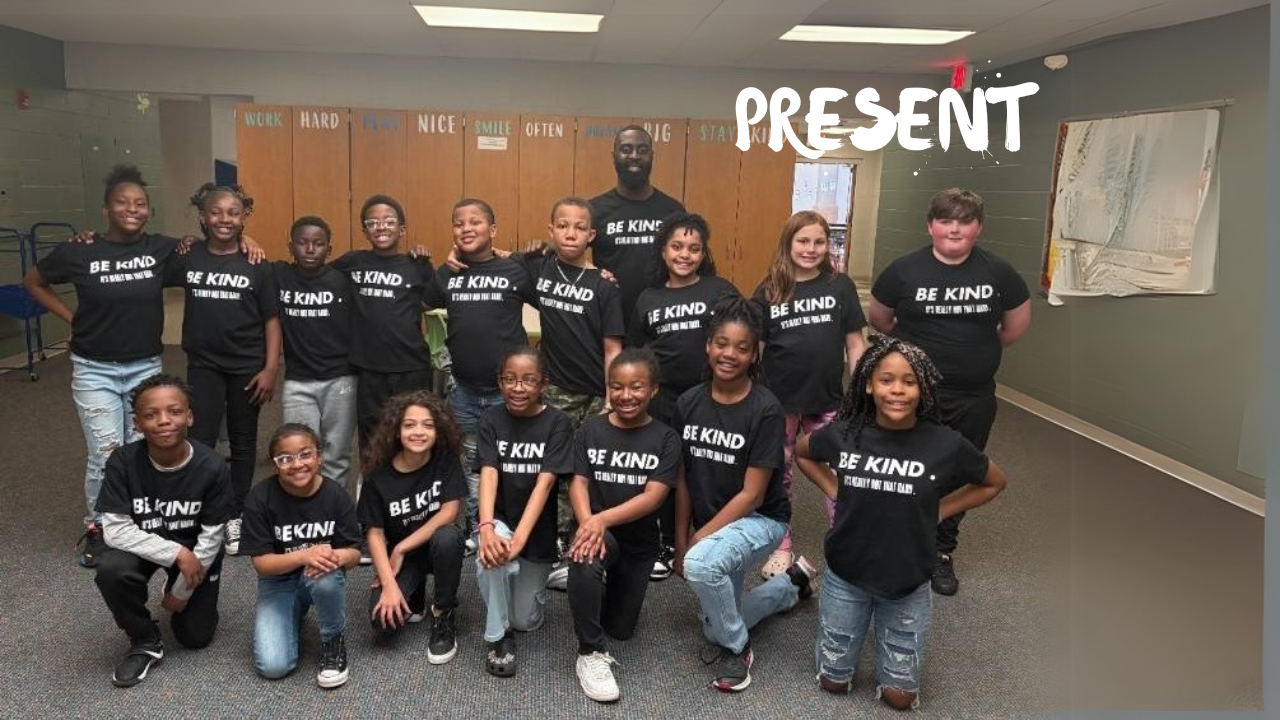
Though Marcus doesn’t use the word “father figure” to center himself, he does talk about what it means to become one, for the kids who need a reflection of who they might grow into.
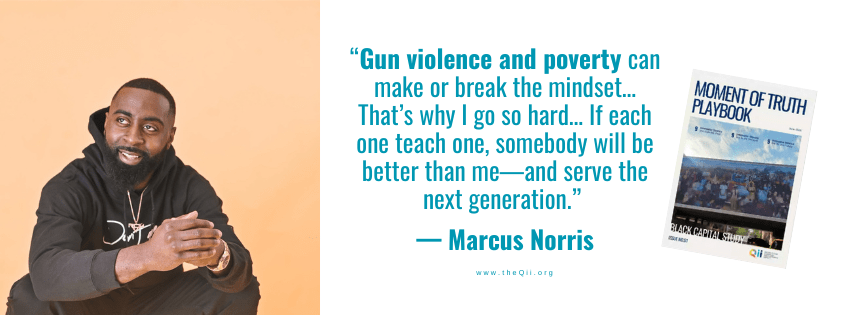
“Gun violence and poverty can make or break the mindset… That’s why I go so hard… If each one, teach one, somebody will be better than me, and serve the next generation.”
The limp in his walk, the slower movement on one side of his body—these aren’t vulnerabilities. They’re reminders of what he’s endured and what he chooses to build anyway.
This is Marcus Norris’s Moment of Truth.
1 | What was the moment that changed everything?
“Once my mother passed away, I felt like I wanted to give up on myself… I lost my best friend and my main support system.”
Marcus Norris speaks of that loss not just as personal pain but as the start of an inner reckoning. In college, without food, a car, or a clear safety net, he walked five to six miles a day—choosing, instead of collapse, to speak life into himself. Through affirmations like #AgainstAllOdds, he began building emotional capital not only for himself, but for others who saw his example.
“Once I started speaking life into myself, others started catching on… they started being inspired by it as well.”
This is where the Reality Check Movement was born—not in retail strategy, but in an act of spiritual resilience.
2 | What systems were you up against?
His answer spans both internal and external systems:
“The emotional barrier was… how can I use my words correctly in order to get the information out there the right way, without feeling like I’m chastising others?”
Marcus wrestled with how to challenge while affirming, and how to bring messages of power to others without triggering defensiveness.
On the structural side, he named familiar entrepreneurial barriers:
“Understanding the financial components… taxes, funding—it wasn’t clear. That was a struggle.”
But beneath these was the deeper context: growing up in a world shaped by poverty and gun violence, and being a survivor himself.
“I was shot in the head at seven years old… I had to relearn everything—from my numbers to my words. I had a 504 plan. I had an IEP. My learning curve was way different than all my friends… but I had to keep the faith.”
His IEP wasn’t just a learning plan—it was a scarlet letter, proof the system expected less. He proved them wrong. Not only did Marcus complete university. He obtained a Master’s Degree.
This backstory is not a footnote. It’s the very architecture of his emotional capital.
3 | What did you try, even if it wasn’t perfect?
He experimented with designs and slogans, assuming their meaning would carry:
“I dropped a sweater with the quote Against All Odds… I thought everybody would understand… but others didn’t gravitate to it.”
In this moment, he questioned the resonance of language, not the worth of his message.
4 | What helped you keep going?
“Just knowing that I have power… We all have power. But it depends on how we choose to distinguish it.”
For Marcus, the feedback loop was from people. Young men he mentored in elementary school kept returning years later, still seeking guidance. This ongoing connection with students he served—many now in college—fueled his purpose.
“Just because I’m getting older doesn’t mean my goals and dreams aren’t being fulfilled.”
The truth that sustains him is not hustle culture—it’s intergenerational witness.
5 | What truth do you want people to remember from your story?
“Perseverance and resilience are part of the journey… Things are always going to be tough. But that don’t mean it’s always going to be bad forever.”
He wants others to know that storms don’t erase the sun.
© 2025 Institute for Quantum Innovation & Impact (The Qii). Licensed under CC BY-NC-ND 4.0.
Originally catalyzed by philanthropic seed funding and now stewarded by the innovators whose stories appear here, with support from a growing network of researchers, educators, system architects, and community investors.

