Spiritual Capital in the Battle for Justice
In a small town in Mississippi, where cotton fields stretched to the edge of the horizon and Jim Crow laws ruled the ground beneath them, a woman named Fannie Lou Hamer found herself at the intersection of suffering and sacred purpose. Born in 1917 to a family of sharecroppers, Hamer understood hunger and hard labor from a young age. But it wasn’t poverty alone that shaped her—it was the searing contradiction of being an American citizen denied the most basic civic rights.
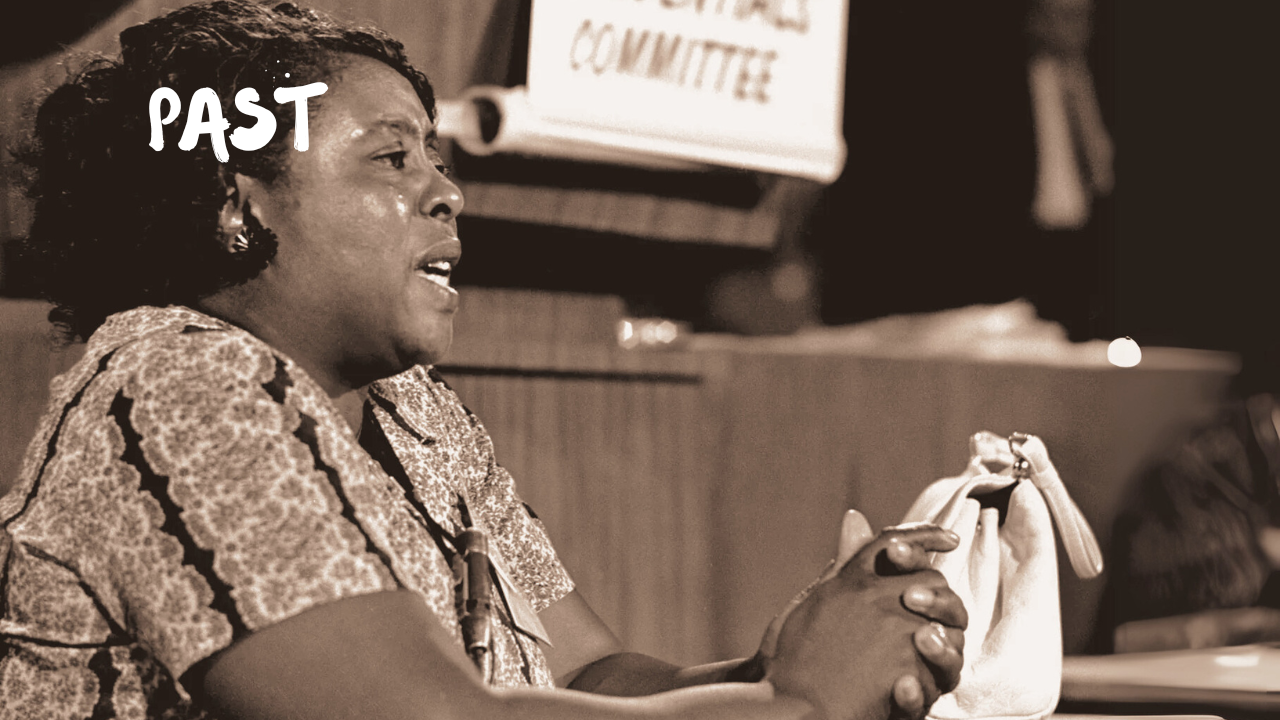
In 1962, Hamer volunteered to register to vote. For that act alone, she lost her job, her home, and nearly her life. While traveling with fellow activists, she was jailed in Winona, Mississippi, and brutally beaten at the orders of local law enforcement. She lived with the physical pain for the rest of her life. And yet, when she stood to speak, she did not curse the system. She called on a higher order of justice. “I am sick and tired of being sick and tired,” she told a national television audience in 1964, during her testimony before the Democratic National Convention Credentials Committee. It wasn’t just a cry of exhaustion. It was a spiritual indictment.
Hamer wasn’t ordained by any institution, but she ministered through moral clarity. Her voice cut through legal jargon and political calculation because it carried the weight of experience fused with ethical resolve. When her voting rights were denied, she didn’t just protest—she co-founded the Mississippi Freedom Democratic Party to challenge the legitimacy of the all-white state delegation at the DNC.
She sang spirituals in jail cells and at rallies not as performance, but as collective remembrance and resistance strategy. She turned pain into prophecy. For Hamer, faith wasn’t a private affair—it was a public mandate to speak truth, even when the price was excruciating.
Yet her leadership was not always welcomed—not by white moderates who feared disruption, nor by some in the civil rights movement who saw her as too raw, too rural, or too poor to represent the cause. Still, she persisted. She fed people from her Freedom Farm Cooperative. She registered voters. She challenged power with relentless hope.
And she reminded America, through tears, bruises, and psalms, that spiritual capital isn’t about religion. It is about the courage to confront systems of injustice with a deeper source of conviction than fear or strategy alone.

🗝️ Qii Takeaways on Spiritual Capital
Fannie Lou Hamer’s story reveals a form of spiritual capital that is often invisible to data-driven systems: the capacity to sustain purpose and clarity under sustained pressure. Her strength wasn’t just personal—it was collective, carried in songs, scriptures, and shared memory.
When something sacred enters a system shaped by scarcity, it attracts not only gratitude—but envy, grief, and fear. Hamer’s leadership was a test of whether institutions could receive spiritual intelligence without weaponizing it. Too often, they failed.
In our time, spiritual capital remains under-acknowledged in policymaking and entrepreneurship alike. But Hamer’s legacy reminds us that the ability to name truth—and survive its cost—is a form of leadership that changes history.
© 2025 Institute for Quantum Innovation & Impact (The Qii). Licensed under CC BY-NC-ND 4.0.
Originally catalyzed by philanthropic seed funding and now stewarded by the innovators whose stories appear here, with support from a growing network of researchers, educators, system architects, and community investors.

