Banking on Justice
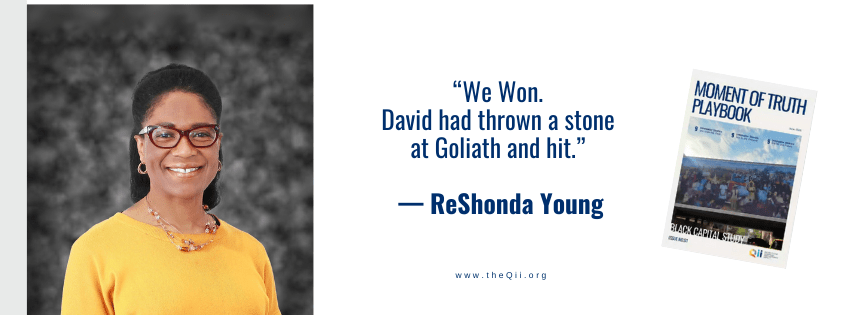
“As a child, I believed all things were possible. My life has been a “God story” — one of listening for His direction and moving when He says go, even when the path seems impossible.”
To understand why she doesn’t quit—why she believes she can’t quit—she starts her origin story with her parents and grandparents:
“My parents were born in Mississippi in the 1940s, under the heavy shadow of Jim Crow. My grandparents were sharecroppers. My mother’s family fled to Waterloo, Iowa in 1965 to escape racial terror, hoping to find something better. What they found was different, but not entirely free from prejudice.”
More than 50 years later, in 2019, she learned just how alive that prejudice remains. She’d built a successful rental property portfolio through steady work and faith, backed by years of good relationships with her bank. But things changed when her contacts left.
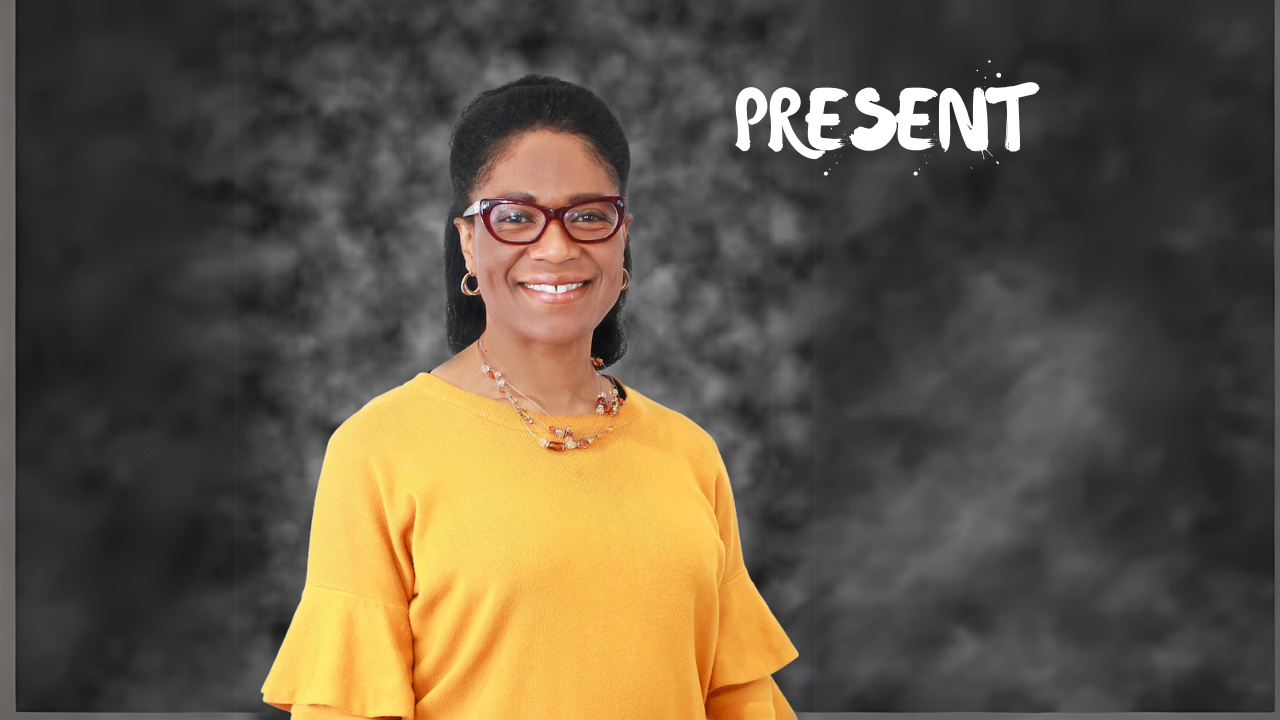
This is ReShonda Young’s Moment of Truth.
1 | What moment changed everything for you?
“One afternoon, the new banker called — from his cell phone, not a bank line — and said, “We don’t want your business anymore.” Without warning or cause, he threatened to call my loans and foreclose on my properties unless I moved my accounts. I was stunned. I asked why. His answer: “My boss thinks you’re threatening.” A man I’d never even met.”
Was this really happening in 2019? She reflected on her dreams, her family, and everyone who ever fought to own something in this country.
Sitting breathless in her car, she realized the battle was bigger than one portfolio; it was a generational test for others who look like her, who try to build something lasting, only to have it torn away.
2 | What system or obstacle were you up against?
ReShonda had to navigate many obstacles:
“So I fought. Alone, at first.”
– Institutional bias. A new bank president saw her growth as risk, not promise.
– Legal intimidation. “They would fight me, and sue me if I spoke publicly.”
– Access to counsel. “No local law firm would challenge a billion-dollar bank with me.”
– Capital barriers. Real-world evidence of lending discrimination was building up not only in her unique situation, but her story was opening doors into understanding others’ capital barriers, too.
But she kept telling her truth — loudly, repeatedly. Finally, a national small business group called. They’d been searching for real-world evidence of lending discrimination to force the government to act. Her case, alongside others, became part of a federal lawsuit to compel the Consumer Financial Protection Bureau (CFPB) to enforce long-ignored anti-discrimination rules. Then, in 2020, came the ruling:
“We won. David had thrown a stone at Goliath and hit.”
3 | What did you try, even if it wasn’t perfect?
But in spite of the federal win, the local bank battle raged on. Eventually, she met the bank’s president face to face, showed him undeniable proof of their wrongdoing. He promised to fix things.
“Days later, I got an email. They would fight me, and sue me if I spoke publicly.”
She deployed several tools:
Legal runway: She wrote her own legal responses until a young attorney joined. Though fear crept in, even for the attorney.
– Accounting and Evidence management: She kept receipts and other proof to provide evidence on lending discrimination.
– Media Spotlights: Leveraged media—Des Moines Register, USA Today, Black Enterprise—to expose threats.
– Prayer: “I asked God for words, not mine — His.”
Then an editor from the Des Moines Register called. They were printing her story in the Sunday paper. She sent every file, including that threatening email. Before the story ran, she informed the bank president. The fear of public exposure forced them to undo everything: the threats, the liens, the attempts to steal what she had built.
Sixteen brutal months. But God was not done.
“I prayed again. “Lord, let the next thing be small. Something I can fund. Something I’m qualified for.” I laughed when I heard His reply:
“You’re going to start a bank.”
4 | What helped you keep going?
ReShonda had no banking background. No millions in reserve. But she said “yes” anyway:
“That’s how Bank of Jabez was born. Not as my bank, but as ours. Built to serve all people with dignity, designed from the ground up for economic justice. Our team realized it’s easier to create a new system than to fix a broken one.”
It hasn’t been easy. The process is steep and the cost is high. But God has opened doors. Regulators have leaned in to help. Support — local and national — has poured in. The media caught wind of our story —USA Today, Black Enterprise, The Des Moines Register, and even a national podcast series.
“We are close. If we meet our $25 million capital goal, submit our application on time, and receive approval, Bank of Jabez could begin serving the community this year.”
5 | What truth do you want people to remember from this story?
Fundamentally, this journey to build solutions to brokenness in existing systems is not about serving her own needs:
“It was about creating the very thing that I, and so many others, needed: a fair, just, trustworthy financial institution. A bank where equity and inclusion are baked into the DNA, not added on as an afterthought.”
Sometimes building a just alternative is not only possible—it’s necessary.
© 2025 Institute for Quantum Innovation & Impact (The Qii). Licensed under CC BY-NC-ND 4.0.
Originally catalyzed by philanthropic seed funding and now stewarded by the innovators whose stories appear here, with support from a growing network of researchers, educators, system architects, and community investors.

