
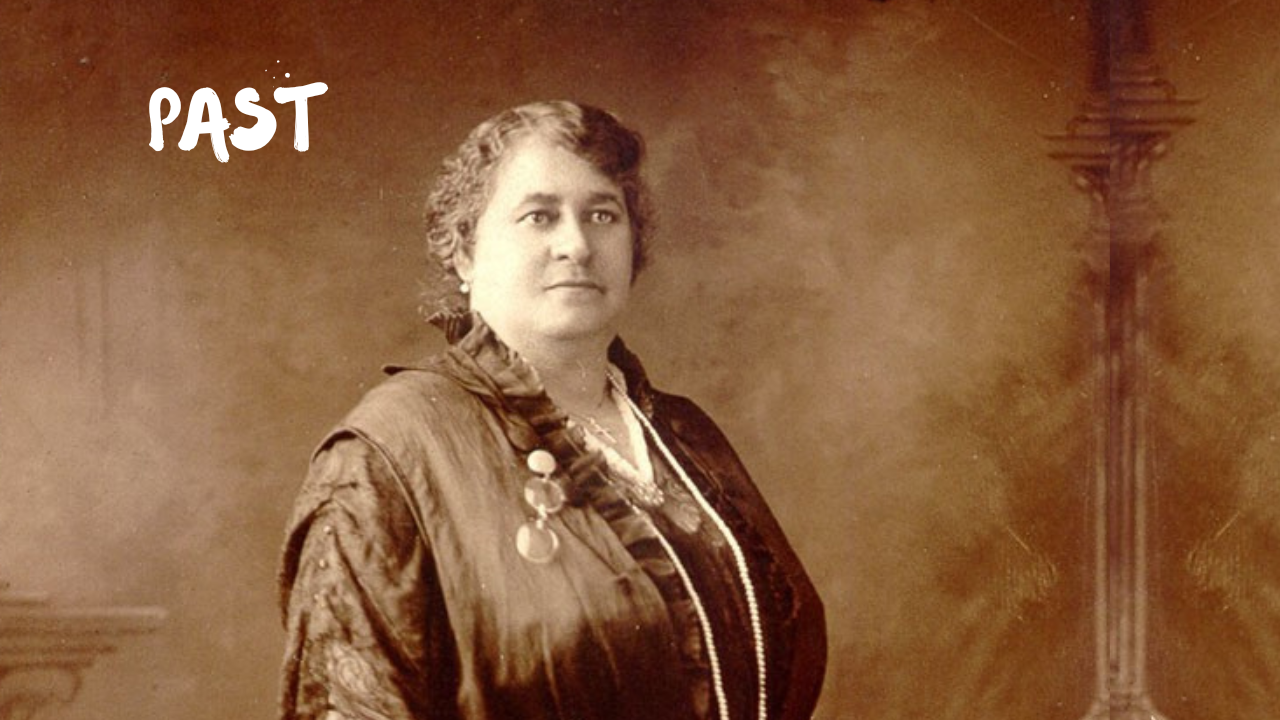
In the early 1900s, in the heart of Richmond, Virginia, Maggie Lena Walker shattered expectations by becoming the first woman in U.S. history to charter and serve as president of a bank.1 Not just the first Black woman—the first woman. Full stop.
Walker’s entrepreneurial path was deeply rooted in the mutual aid and cooperative economics of the Black community, particularly through her leadership in the Independent Order of St. Luke.2 What began as a fraternal organization focused on community support and burial services grew into an economic engine that included a department store, a newspaper, and the St. Luke Penny Savings Bank, founded in 1903.3
But Walker’s vision wasn’t just about business—it was about dignity, visibility, and systemic change. She recognized that symbols carry weight, and by claiming the mantle of bank president, she became a living counter-narrative to the dominant message of the time: that only white men could steward financial trust.
Her success was met with quiet obstruction and overt retaliation. Other bankers, virtually all white men, withheld interbank cooperation, making operations more difficult.4 Local merchants refused to accept checks drawn from her bank.5 This was not merely interpersonal
bias—it reflected a larger economic regime reacting to perceived threats to its monopoly on symbolic and material power.
Even when Walker’s bank outperformed peers during economic downturns, it was treated as an exception, not a precedent. Her story, for decades, remained footnoted—recognized only in niche histories, rarely elevated in broader narratives of American finance or entrepreneurship.6
In her own words, Walker called this system “the lion of prejudice.”7 She was not naming a single man, but an entrenched pattern—one that guarded capital, status, and visibility from those considered “too different” to trust. Her work, therefore, wasn’t just economic. It was an act of symbolic restoration: making Black women’s leadership visible and valid within systems designed to erase it.
She passed away in 1934, but her legacy endured. In 2000, the U.S. Department of the Treasury formally acknowledged her contributions by restoring and preserving her home as a National Historic Site.8 And in 2018, a statue of her was installed in downtown Richmond, not just as a memorial, but as a public correction to historic symbolic imbalance.9

🗝️ Qii Takeaways on Symbolic Capital
Maggie Lena Walker’s story reveals that symbols of leadership are not neutral. Who gets to open a bank, hold a title, or be carved in stone reflects not just merit, but systemic permission.
- Visibility was currency. Walker’s power stemmed from her ability to build institutions that embodied dignity in plain sight.
- Resistance came not only from rivals but from the architecture of trust itself. The banking commissioner’s hesitation and merchant resistance weren’t aberrations. They were protocols of exclusion, encoded into the economic system.
- Narrative repair is ongoing. Walker’s statue and historic site are steps toward reclaiming symbolic capital, but the patterns that delayed her recognition still echo in how we assign trust, leadership, and visibility today.
The question is no longer did Maggie Lena Walker earn her place.
It’s why did the system wait so long to admit she already had?
© 2025 Institute for Quantum Innovation & Impact (The Qii). Licensed under CC BY-NC-ND 4.0.
Originally catalyzed by philanthropic seed funding and now stewarded by the innovators whose stories appear here, with support from a growing network of researchers, educators, system architects, and community investors.

